
Every clinical trial dataset represents people who volunteered their time, energy, and health information in the hope of advancing medicine. That contribution doesn’t have to end when a study report is finalised. When shared responsibly, anonymised individual patient data can answer new scientific questions, support meta-analyses, and help other researchers build on established findings. This is the premise behind the growing clinical data sharing movement spanning big pharma, biotech, and academia alike. It is also a cornerstone of the broader Open Science movement, which promotes transparency, reproducibility, and collaboration.
At September’s PHUSE Data Transparency Autumn Event, Jennifer O’Callaghan, the Executive Director of Vivli Europe, shed light on the future of clinical data sharing as the EU adopts the European Health Data Space (EHDS) framework. This framework, Jennifer noted, will introduce additional regulatory and procedural complexity to clinical data sharing. With the implementation of the EHDS approaching fast, preparing data, processes, and knowledge early is essential for organizations that want to keep sharing compliantly and efficiently. Jennifer’s talk prompted us at Staburo to reflect on the importance of data sharing and the platforms that make it possible, such as the Yale Open Data Access, ClinicalStudyDataRequest.com, and Vivli.
This insight piece takes a closer look at Vivli. We introduce the platform, outline what contributors should consider when preparing data for sharing, and explain how an interested party can request access to clinical study data. We also discuss common pitfalls and how Staburo as a service provider can support each step of the process for data providers and requestors alike.
What is Vivli?
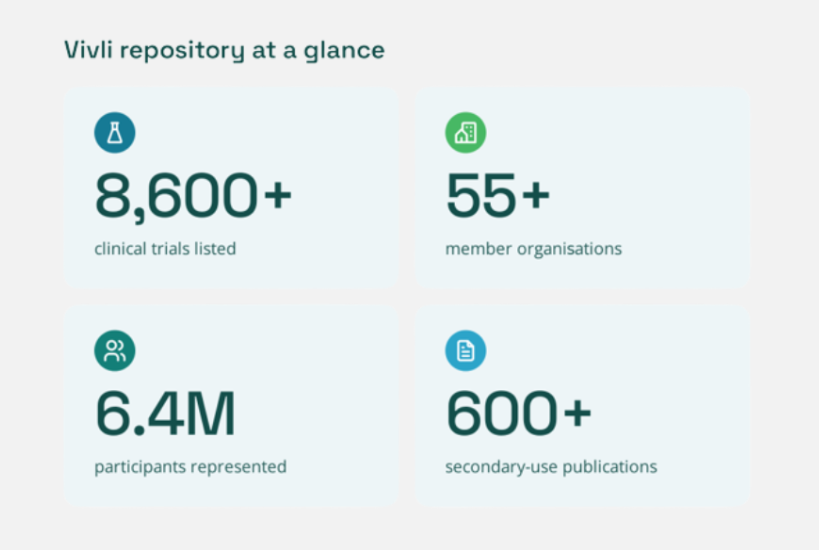
Vivli operates as a global nonprofit clinical research data sharing and analytics platform, connecting the organizations that generate clinical trial data (data contributors) to the researchers who want to reuse it (data requestors). Members include large pharmaceutical companies, academic institutions, foundations and NIH-funded initiatives, giving the platform a broad and credible base of contributed data.
The data contributor’s perspective: why clinical trial sponsors share data
While data sharing has always been a pillar of Good Scientific Practice, it is now becoming an explicit part of clinical trial sponsors’ transparency commitments, whether driven by journal publication policies, funder mandates, regulatory requirements or voluntary industry principles.
Vivli offers data contributors:
- A Centralized and Structured Process to fulfil data sharing commitments without having to build and maintain a proprietary data request infrastructure for every trial.
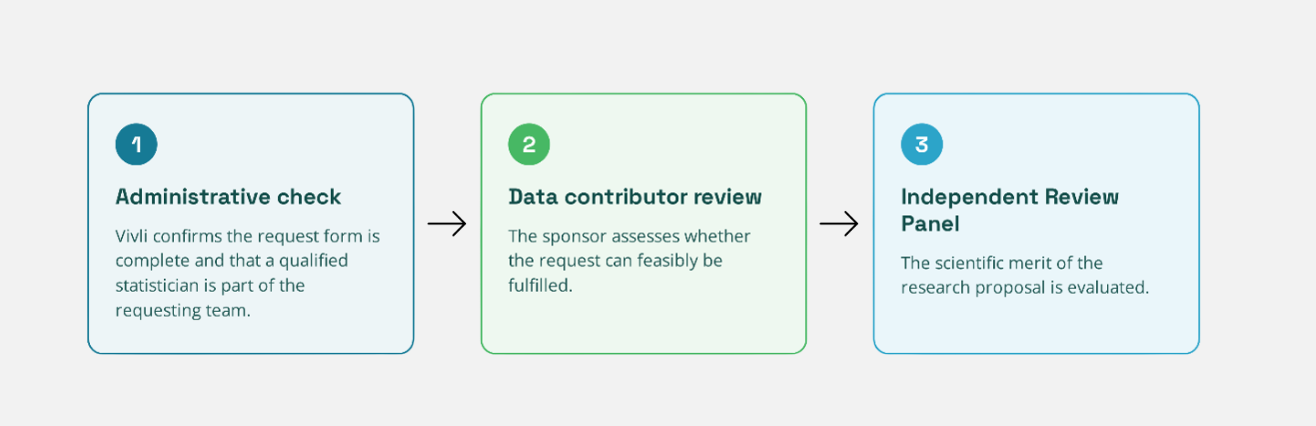
- Independent Review of research proposals on the basis of scientific merit by a qualified Independent Review Panel (IRP).
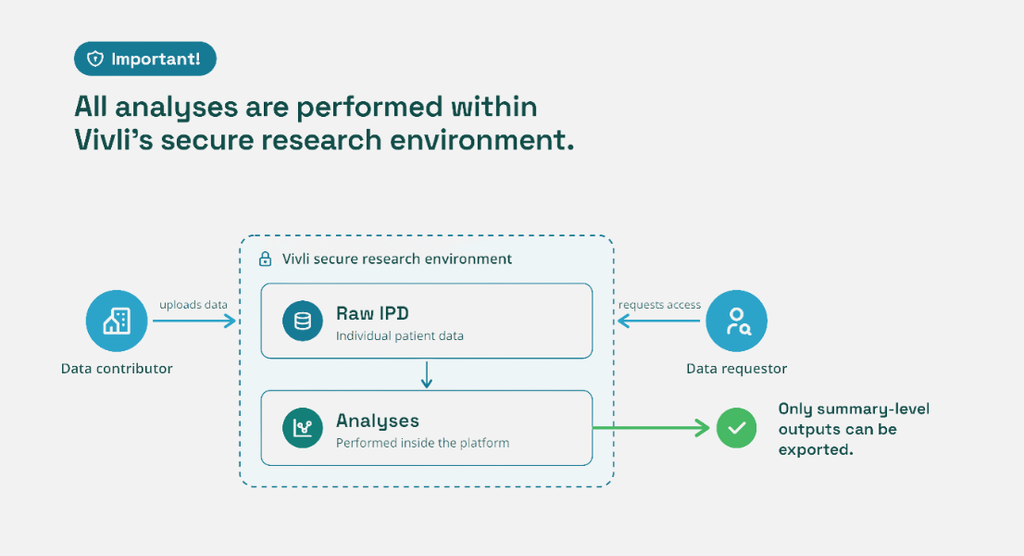
- A Secure Environment for data hosting which is cloud-based and has passed rigorous independent security audits and stress-testing.
Together, these features allow sponsors to share data in a way that is efficient, auditable, and consistent.
The data requestor’s experience
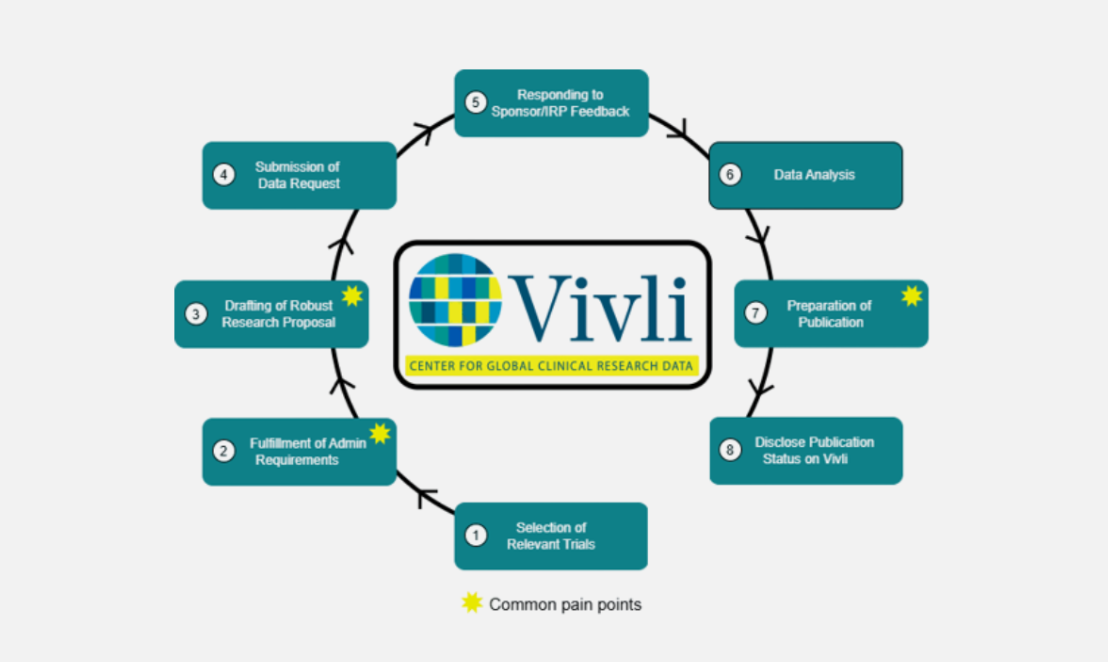
For data requestors, using Vivli starts with searching the platform’s indexed trial metadata and submitting a data request for the studies of interest. From there, requests typically move through up to three review stages:
If the request is approved (a process that takes 5.4 months on average), the requestor is granted access to the data through Vivli’s secure research environment. There, the data can be analysed with the users’ own data, tools, algorithms, and statistical software, oftentimes for no charge for up to 365 days.
The challenges behind the scenes, and where Staburo can help
For data contributors: Informed consent and anonymization
Before a data contributor can consider sharing a dataset, they should confirm that the original trial’s informed consent forms (ICF) permit it. Our Data Transparency & Medical Writing team has extensive experience reviewing ICFs to determine whether the consent language covers secondary data use and sharing with third parties. By flagging ambiguous or restrictive language early, before a sponsor commits to listing a trial on Vivli or responding to a data request, our team can help avoid downstream complications.
Sharing IPD responsibly means striking a careful balance: the anonymization applied to a dataset has to minimize re-identification risk while preserving enough structure and detail for the data to remain scientifically usable. The same principle applies to the accompanying clinical documents (protocols, statistical analysis plans, data dictionaries) that are often shared alongside the data, where data contributors must also protect commercially confidential information without undermining the usability of the data package.
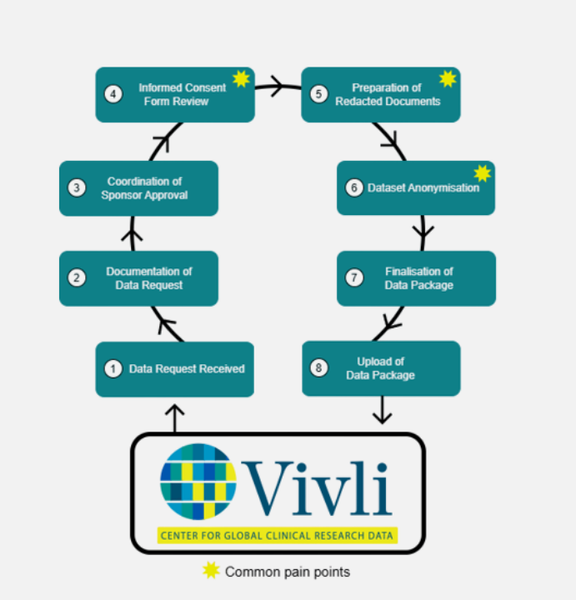
From data request to upload: Staburo can share the load – Staburo can perform or provide support for every stage of the workflow, from receipt of a data request via Vivli to the upload of the final data package.
For data requestors: Strong proposals and statistical support
Researchers on the requesting side face their own hurdles, and two come up especially often. The first is putting together a research proposal strong enough to hold up under scientific merit review. A poorly defined proposal is a common reason why requests stall or are sent back for revision. The second is more procedural but just as much of a potential obstacle: Vivli requires that a qualified statistician be part of the requesting team. For researchers without an in-house biostatistician, or without one available to commit the necessary time, this requirement alone can hold up a request indefinitely.
Staburo supports data requestors on both fronts. Our medical writers can help draft and refine a research proposal so that the scientific rationale, trial selection, and analysis plan are presented clearly and persuasively from the outset. Our biostatisticians, in turn, can take on the role of the qualified statistician for the requesting team, contributing not just to satisfy the administrative requirement, but to help shape a sound statistical analysis plan for the research proposal.
From trial selection to publication, the data requestor’s workflow – Staburo can support each step of the process.
A growing part of the transparency landscape
Platforms like Vivli are becoming a standard component of how the industry fulfils its data sharing commitments, and that trend shows no sign of slowing. For those sharing or requesting data within the EHDS framework, this process will become far more complex in the coming years. Having a strong procedural foundation in preparation for these changes is essential. Whether you plan to share data as a contributor or to submit a data request, our team brings the process experience and regulatory expertise to guide you through every step.
Disclaimer: The views and opinions expressed in this post are those of the author alone and do not necessarily reflect the official policy, position, or views of Vivli. This content is provided for informational purposes only and should not be taken as an endorsement or statement by Vivli.
For more information about Vivli, please visit their homepage at www.vivli.org